Remember when your little one brought home their first “report card” from preschool? For many parents, the idea of grades in early childhood education can feel a bit… well, confusing. We’re so used to seeing A’s, B’s, and C’s for older kids, but what does that even look like for a four-year-old exploring the world through finger paints and storybooks? Honestly, it’s a question I get asked a lot, and it’s a fantastic one to explore because the approach to early childhood education grades is vastly different from what you might expect.
Think of it less like a traditional report card and more like a snapshot of your child’s developing world. These aren’t about ranking or comparing little ones; they’re about understanding where each child is on their unique developmental path. It’s about celebrating progress, identifying areas where a little extra support might be beneficial, and fostering a lifelong love of learning. So, let’s dive in and demystify what “grades” really mean in these crucial early years.
Beyond the Letter: The True Purpose of Early Childhood Assessments
When we talk about “grades” in early childhood education, it’s important to understand that it’s rarely about assigning a letter or number in the way a fifth grader gets graded on a math test. Instead, educators use a variety of methods to observe, document, and communicate a child’s progress. The overarching goal is always to support the child’s holistic development – not just academically, but socially, emotionally, and physically too.
These assessments help teachers:
Understand Individual Needs: Every child learns at their own pace and has unique strengths and challenges. These observations allow teachers to tailor their teaching strategies to meet each child where they are.
Track Developmental Milestones: From learning to share to mastering a new cutting skill, educators are watching for key milestones that indicate healthy development across various domains.
Inform Instruction: The “grades” or assessments serve as vital feedback for teachers, guiding their lesson planning and ensuring they are providing appropriate learning experiences.
Facilitate Parent-Teacher Communication: These insights become the basis for conversations with parents, creating a partnership to support the child’s growth.
It’s a collaborative process, really. The teacher is the guide, the child is the explorer, and the parent is the crucial partner in this adventure.
What Are We Actually “Grading”? Key Areas of Focus
So, if it’s not about memorization and test scores, what are educators observing and documenting? It’s a broad spectrum of skills and behaviors that lay the foundation for future learning. Here are some of the key areas that inform the “grades” in early childhood education grades:
#### Social and Emotional Development: The Heart of Early Learning
This is arguably one of the most critical areas. Can your child:
Share and take turns?
Express their feelings appropriately?
Follow simple classroom routines?
Interact positively with peers and adults?
Show empathy or concern for others?
These skills are the bedrock for successful group learning and positive social interactions throughout life.
#### Cognitive Development: Sparking Curiosity and Understanding
This isn’t just about knowing ABCs and 123s, though those are important too! It’s also about:
Problem-solving abilities: How do they approach a puzzle or a building challenge?
Curiosity and exploration: Do they ask questions and show interest in their surroundings?
Early literacy skills: Recognizing letters, understanding story structure, developing a love for books.
Early numeracy skills: Counting, recognizing shapes, understanding basic quantities.
Memory and attention span: Can they focus on a task for a reasonable period?
#### Physical Development: Moving and Growing
Both fine motor and gross motor skills are essential. Think about:
Gross Motor Skills: Running, jumping, climbing, balancing.
Fine Motor Skills: Holding crayons, using scissors, manipulating small objects, buttoning clothes.
Self-help skills: Dressing themselves, feeding themselves, managing bathroom needs.
#### Language and Communication: Finding Their Voice
This encompasses both understanding and expressing themselves. Are they:
Using language to communicate their needs and ideas?
Following directions?
Engaging in conversations?
Developing a rich vocabulary?
How are these “Grades” Actually Documented? Methods and Tools
The actual reporting of a child’s progress can take many forms, and it often depends on the specific preschool or early learning center. Here’s a peek at common approaches that contribute to understanding early childhood education grades:
Anecdotal Records: Teachers keep brief notes on specific observations of a child’s behavior, interactions, or learning moments. These are incredibly rich in detail.
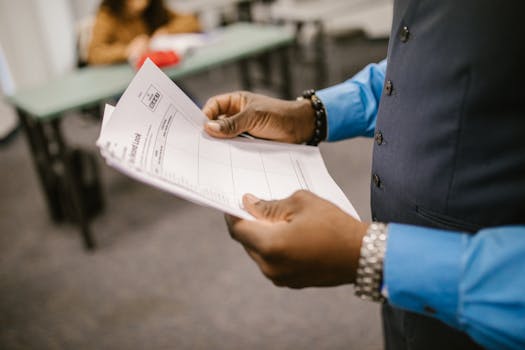
Checklists and Rating Scales: These tools help educators systematically track progress on specific developmental milestones or skills. They might tick boxes indicating a child “can do,” “is learning to do,” or “needs support with” a particular skill.
Portfolios: These are collections of a child’s work over time, such as drawings, paintings, dictated stories, and photos of their projects. They visually showcase growth and development.
Developmental Screenings: These are standardized tools used to identify children who may be at risk for developmental delays. They are not “grades” in the traditional sense but are crucial for early intervention.
Parent-Teacher Conferences: These are invaluable opportunities to discuss a child’s progress in depth, share observations, and set collaborative goals.
You might receive a narrative report, a summary of skills observed, or a combination of these. The key takeaway is that it’s designed to be informative and supportive, not judgmental.
Making Sense of Your Child’s Progress Reports
When you receive a report about your child’s development, remember it’s a collaborative tool. Here are some tips for engaging with it effectively:
Read with an Open Mind: Try not to focus on finding “problems.” Instead, look for insights into your child’s strengths and areas where they are growing.
Ask Questions: If anything is unclear, don’t hesitate to ask the teacher for clarification. That’s what they’re there for!
Focus on Progress, Not Perfection: Early childhood is all about the journey. Celebrate the small victories and recognize that development isn’t linear.
Partner with the Educator: Use the information to support your child at home. If the report mentions a child is working on sharing, you can practice this skill during playdates.
* Celebrate Strengths: Make sure to acknowledge and praise what your child is doing well! Positive reinforcement goes a long way.
Final Thoughts: Embracing the Journey of Early Learning
Ultimately, the “grades” in early childhood education are less about judgment and more about understanding and nurturing. They are a testament to the incredible work educators do to observe, support, and guide our youngest learners. It’s about building a strong foundation, fostering curiosity, and helping each child blossom into their unique potential. So, the next time you hear about early childhood assessments, remember it’s not about a letter – it’s about a little human’s amazing journey of discovery.
Actionable Tip: Schedule a conversation with your child’s early childhood educator to ask them directly about their approach to observing and communicating student progress. This open dialogue is the best way to truly understand your child’s learning experience.